By: Trisha Clark
In our deeply connected world, a strong data protection program is no longer a luxury. It’s the very foundation of business resilience and customer trust. Building this foundation is a continuous journey. A future-built data protection program adapts as your organization evolves, allowing your data security to advance and meet new business objectives, technologies, and threats head-on.
Why a Strong Data Protection Program Matters
In the binary heartbeat of our digital world, cybersecurity professionals stand as protectors driven by duty and powered by purpose. With 93% of Americans now online, a constant flow of personal, critical, and sensitive information is shared, created, and used every second.
Data is the asset that turns the wheels of modern commerce, driving everything from daily operations to groundbreaking innovation and competitive advantage. Unfortunately, this same data also fuels cyber-criminal enterprises, making its protection a top priority.
Cyberattacks are a growing threat to businesses of all sizes. Each year the cybersecurity industry waits for the latest reports of the rising price tag of a data breach, currently estimated to be an average $4.76 million. While we often hear about breaches at Fortune 500 companies, 76% of small and medium-sized companies have experienced at least one cyberattack. The financial impact is significant, with average incident response costs ranging from $1.24 million to $3.31 million, putting their very existence at risk.
Safeguarding Enterprise Data in the Digital Age
A data protection program that saves data from loss, theft, and tampering is essential to securing your organization. Here’s how it empowers your business:
- Ensures Data Accuracy and Availability: To make confident, data-driven decisions, your organization must trust that its data is accurate and accessible. Implementing a robust Data Security Posture Management (DSPM) solution to inventory and catalog data assets is the first step toward building that trust.
- Improves Organizational Resilience: When cyber threats strike, businesses with secure data storage and up-to-date backups are better equipped to reduce risk and recover quickly. This minimizes disruption, protects revenue, and maintains business momentum.
- Meets Legal and Compliance Standards. Protecting data isn’t just the ethical duty, it’s also essential for compliance. Regulations like the General Data Protection Regulation (GDPR) and the California Consumer Privacy Act (CCPA), along with industry-specific standards like the Health Information Portability and Accountability Act (HIPAA) and the finance industry’s Gramm-Leach-Bliley Act (GLBA) mandate the protection of consumer data.
- Prevents Financial and Reputational Damage. The consequences of a data breach can be severe and long-lasting. A breach can erode customer trust, and lead to significant financial impact from business disruption, legal fees, and remediation efforts.
Understanding Data Protection Lifecycle
The data security lifecycle serves as a blueprint for organizations to identify vulnerabilities in how data is handled. It helps pinpoint gaps that could lead to a data breach. From its creation to its destruction, data is constantly at risk of loss, corruption, and misuse. A comprehensive program addresses security at every stage.
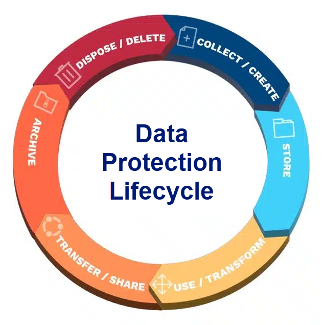
Key Steps to building a Strong Data Protection Program
Starting with a foundational approach ensures you have the necessary elements in place for a continuous improvement process. Here are the essentials for building a solid data protection program that protects data throughout the lifecycle.
- Develop a Data Protection Policy: Start by creating a comprehensive policy that outlines your company’s data protection practices. It should include specifics on the types and sensitivity of data you collect, how it is stored, who has access, and how it will be protected.
- Build a Program Strategy: An effective data protection program requires a comprehensive strategy covering all aspects of data protection. This strategy will help you define your organization’s goals, assess current requirements, and establish a roadmap for continuous improvement.
- Train and Empower Employees: Your employees are your first line of defense. Foster a culture of data security by empowering them with training on password safety, phishing awareness, and the proper handling of sensitive data. Everyone has a role to play in protecting information.
- Use Encryption and Security Technologies: Encryption is a powerful tool that protects data in use, in transit, and at rest. Ensure all sensitive data is encrypted and that you use security technologies like firewalls and intrusion detection systems to prevent unauthorized access.
- Utilize Monitoring Tools: Because data is at risk throughout its lifecycle, continuous monitoring is vital. Data loss prevention (DLP) technologies or similar solutions automate the application of policies and protocols to monitor, detect, and block the malicious use and transmission of sensitive data.
- Implement Data Access Controls: These controls help you determine who has access to your organization’s sensitive data, reducing the risk of unauthorized use. Methods like role-based access controls and two-factor authentication ensure users have the necessary privileges, but no more.
- Have a Data Breach Response Plan: Don’t wait for an incident to happen. Collaborate with your legal and privacy teams to plan ahead. This ensures your organization can respond swiftly and effectively to incidents, minimizing damage and maintaining trust.
- Create a Disaster Recovery Plan: Disasters, from natural disasters like hurricanes and earthquakes, to human-made disasters like cyber-attacks and data breaches, can strike anytime. A disaster recovery plan is a crucial part of any data protection program, helping ensure critical data is protected and available even in the worst-case scenario.
- Regularly Review and Update Your Program: Data protection is an ongoing process that requires regular review and updates. Regularly assess your data protection program and make changes as needed to ensure that it remains effective against evolving threats and aligned with your business goals.

Your Partner in Data Protection
A trusted partner can help you put data protection center stage in your organization. Together, we can build a data security strategy aligned to your data privacy, security, and availability needs. We can help you get the information you need to better understand your data risk landscape and identify exposure.
With our Data Risk Assessment, our data protection experts help you determine the most beneficial next steps to develop a powerful and resilient data protection strategy.
Ready to take the first step toward a stronger data protection program? Connect with us today and transform your approach to data security.