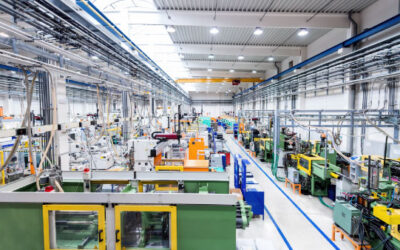
Powering Progress in Industrial Finishing Systems

An industrial finishing systems designer and installer sought to improve project margins and operational efficiency across its end-to-end delivery lifecycle. With highly customized projects, decentralized processes, and limited AI maturity, the organization needed a clear path to modernize operations.
Through a focused, four-week AI roadmap and use case discovery engagement, the company identified and prioritized high-impact AI opportunities tied directly to business outcomes. The initiative delivered a structured plan to increase efficiency, standardize operations, and improve project profitability, while laying the foundation for enterprise AI adoption.
The Challenge
The organization’s delivery model was complex and highly variable, spanning sales, estimating, engineering, production planning, and procurement. That complexity made it difficult to scale operations, improve predictability, and consistently drive profitability.
Key challenges included:
01
Margin variability
Project performance was largely measured through utilization and margin, with frequent customer-driven change orders impacting outcomes more than operational KPIs.
02
Expert-driven but manual processes
A highly experienced workforce relied on powerful legacy models, but their manual nature limited scalability and consistency.
03
Disconnected data insights
Historical data analysis existed but was not part of a consistent, closed-loop process across the project lifecycle.
The Approach
To address these gaps, the team conducted a structured AI roadmap engagement focused on aligning technology opportunities with measurable business value. Over a focused four-week AI roadmap and use case discovery engagement, our team:
Defined success criteria and service blueprint of the current state process.
Conducted stakeholder interviews and current-state discovery
Identified AI use cases aligned to business outcomes
Developed a prioritized, phased AI roadmap
The Solution
Our team worked across all major functional areas—from sales to procurement—to build a comprehensive transformation plan that included:
01
End-to-end process visibility
Mapping the full project lifecycle to uncover inefficiencies and gaps
02
Use case prioritization
Identifying high-impact AI opportunities and rationalizing them across legacy business units
03
Quick wins vs. long-term investments
Clearly separating immediate value opportunities from broader transformation initiatives
04
Future-state “to-be” design
Establishing a scalable framework for AI-enabled operations
A flagship concept that emerged was a Sales-to-Estimate platform. This unified system streamlines the process from initial customer interaction through final pricing and proposal generation, bringing consistency to the front end of every project.
The Results
The partnership delivered unmatched momentum and measurable success on the track. Comparing the seasons before and after implementing the new technology, the racing team achieved:
Prioritized AI opportunities tied directly to business outcomes
across the full project lifecycle
Clear distinction between quick wins and long-term transformation initiatives
Targeted improvements in project margin, efficiency, and standardization
across locations and legacy business units
Defined vision for a unified Sales-to-Estimate platform
to streamline front-end processes and improve consistency
Conclusion
By taking a structured, outcome-driven approach to AI strategy, this industrial finishing systems leader transformed uncertainty into a clear roadmap for innovation and growth.
With aligned stakeholders, prioritized use cases, and a scalable vision, the organization is now positioned to adopt AI with confidence—driving improved margins, greater operational efficiency, and more consistent project execution across the enterprise. Schedule a consultation today.